
Tile Installation Cost in the Twin Cities (2026): Labor, Materials, and What Actually Drives the Price
Tile itself might cost $4 a square foot while installing it costs three times that — and both numbers are honest. This guide separates labor from materials for Twin Cities floors and shower walls in 2026, names the drivers that actually move a quote, and shows you how to spot a bid that is cheap for a reason.
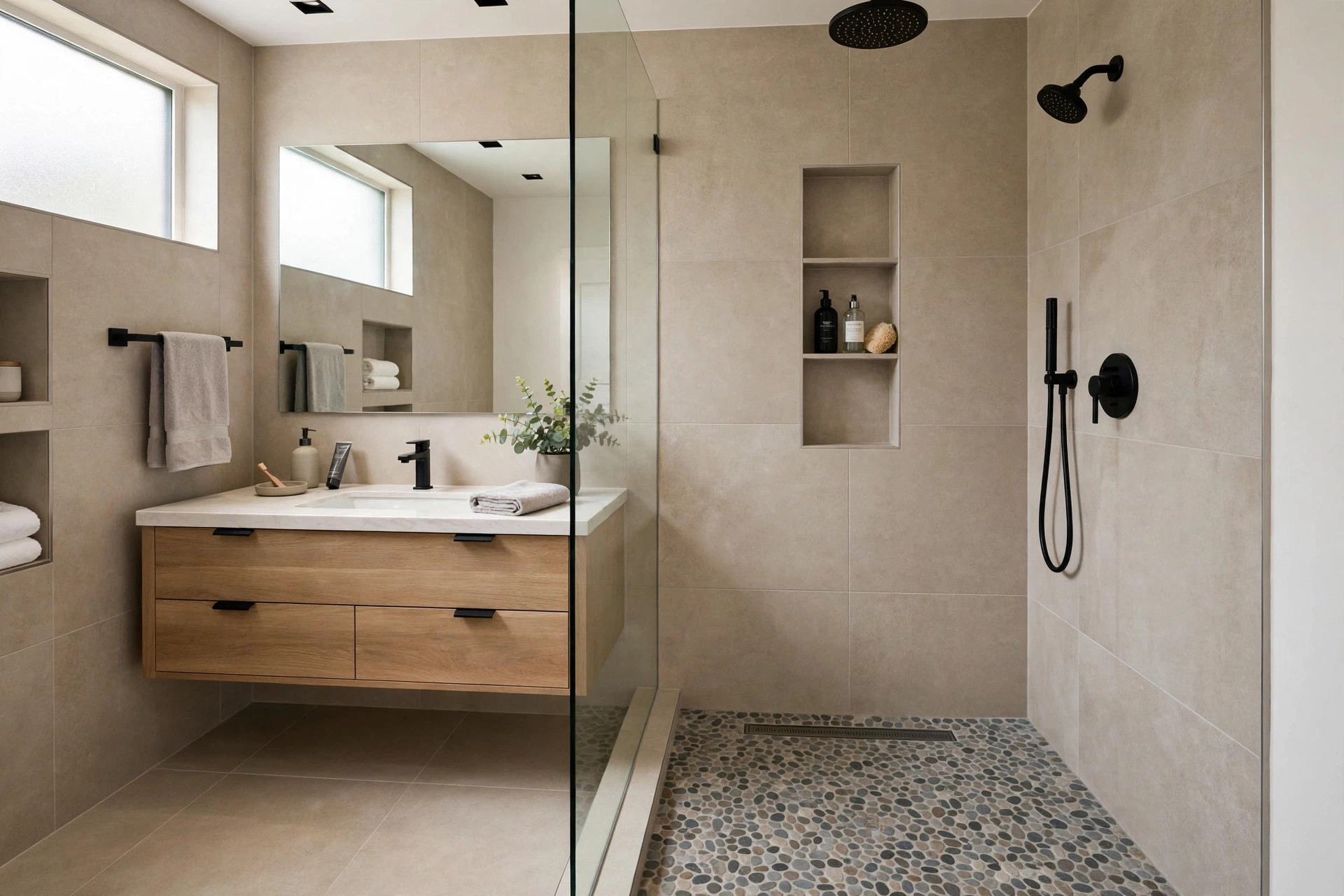
Every tile quote looks simple — a number of square feet, a rate, a total — and almost every argument about tile pricing comes from what that simple math hides. Two installers can measure the same bathroom, multiply by rates $10 apart, and both be pricing honestly, because one is pricing tile and the other is pricing tile plus demolition, flattening, waterproofing, and a niche. This guide gives you the 2026 Twin Cities ranges we work around, in the spirit of our full bathroom remodel cost breakdown, and then shows you the drivers underneath the rate — because the rate is the least informative number on the page.
A note on the numbers: everything below is a typical market range for planning, clearly an estimate — not a quote, not a promise, and not Northline's price list. Your number comes from someone standing in your bathroom. Ranges exist so you can budget and recognize outliers, in both directions.
Labor ranges: floors vs shower walls
| Work | Typical 2026 Twin Cities labor range |
|---|---|
| Bathroom / interior floor tile | $8–$15 per sq ft |
| Shower walls | $15–$30+ per sq ft |
| Shower pan / floor (incl. slope work) | Priced with the shower — details drive it |
| Backsplash | $12–$25 per sq ft (small areas price by the job) |
| Large-format or complex pattern | Upper end of range, or above — see drivers below |
Why do shower walls cost roughly double floor labor per foot? Area math lies. A 60-square-foot floor is one flat plane, set in long runs. A 60-square-foot shower is three walls, inside and outside corners, a sloped pan, a drain to work around, valve and showerhead penetrations, usually a niche, and waterproofing under every inch — set vertically, one tile at a time, against gravity. The days do not shrink with the square footage, so the rate cannot either. National market data tells the same story: HomeAdvisor's cost data consistently shows shower tile installation pricing well above floor tile per square foot across U.S. markets. Treat any quote that prices shower walls like a floor as a quote from someone who has not thought about your shower yet.
Materials, separately: tile itself runs from about $2 per sq ft for basic ceramic to $10–$25+ for quality porcelain, natural stone, or handmade tile. Setting materials — mortar, grout, backer or foam board, membrane, sealants — typically add roughly $3–$8 per sq ft depending on the system. In our broader remodel breakdown, tile plus waterproofing for a shower and floor together typically lands at $4,000–$12,000 of a full project; this post is about how the tile portion of that is built.
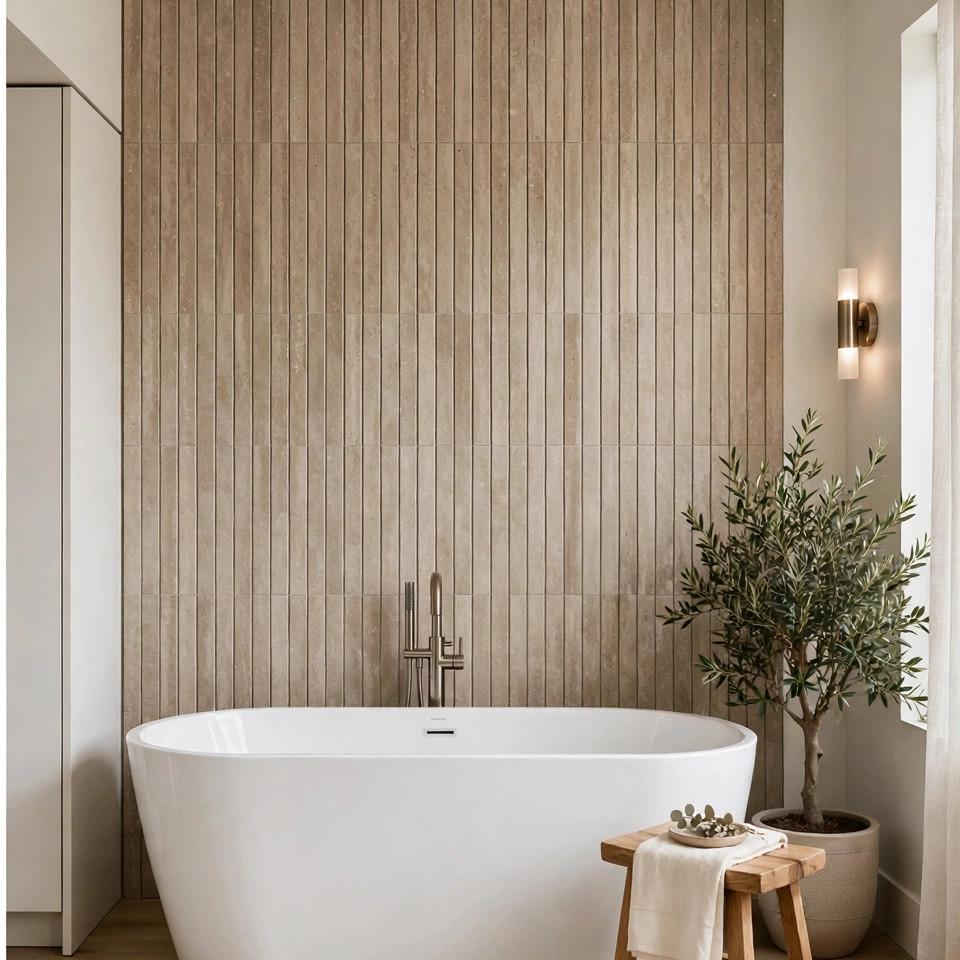
The six drivers that actually move the price
1. Demolition and what it reveals
Old tile, mortar beds, and failed floors have to come out and go somewhere: demo and disposal on a full bathroom typically runs $1,000–$2,500. What demo reveals — rotted subfloor, a pan that has been leaking for years — is the classic budget surprise, and it is nobody's fault. It is also why honest quotes carry a stated process for hidden conditions instead of a shrug.
2. Prep and substrate
Flattening a floor for large format, replacing damaged backer, leveling, crack isolation — prep is skilled time spent before a single tile is set. It is also the easiest line for a cheap bid to quietly delete. Our guide to large-format tile installation details the flatness tolerances involved; the short version is that prep is not overhead, it is the job.
3. The waterproofing system
A named membrane system with sealed seams, corners, and a flood-tested pan costs more than tile stuck to cement board — in materials, a few hundred dollars; in time, the better part of a day or more. It is the highest-value money in the entire project. A quote with no waterproofing system named is not a cheaper quote for the same shower; it is a quote for a different, shorter-lived shower.
4. Tile size and format
Standard 12×24 in a straight stack is the baseline. Large format demands flatter prep and slower setting. Mosaics on sheets look easy and are not — they telegraph every substrate flaw and take fussy, patient labor. Natural stone adds sealing and greater variation to manage piece by piece.
5. Pattern complexity
Herringbone, chevron, basketweave, and diagonal layouts multiply cuts and layout time. A herringbone floor can take half again to twice the setting time of the same tile laid straight. If you love a pattern, budget for it honestly — it is labor you are buying, and it shows.
6. Niches, benches, and details
A tiled niche is a small waterproofed room inside your shower: framing, sloping its shelf, waterproofing every corner, and tiling it with mitred or edged pieces. Benches are the same story at larger scale. Each feature is worth having — and each is a day-part of skilled work, not a checkbox.
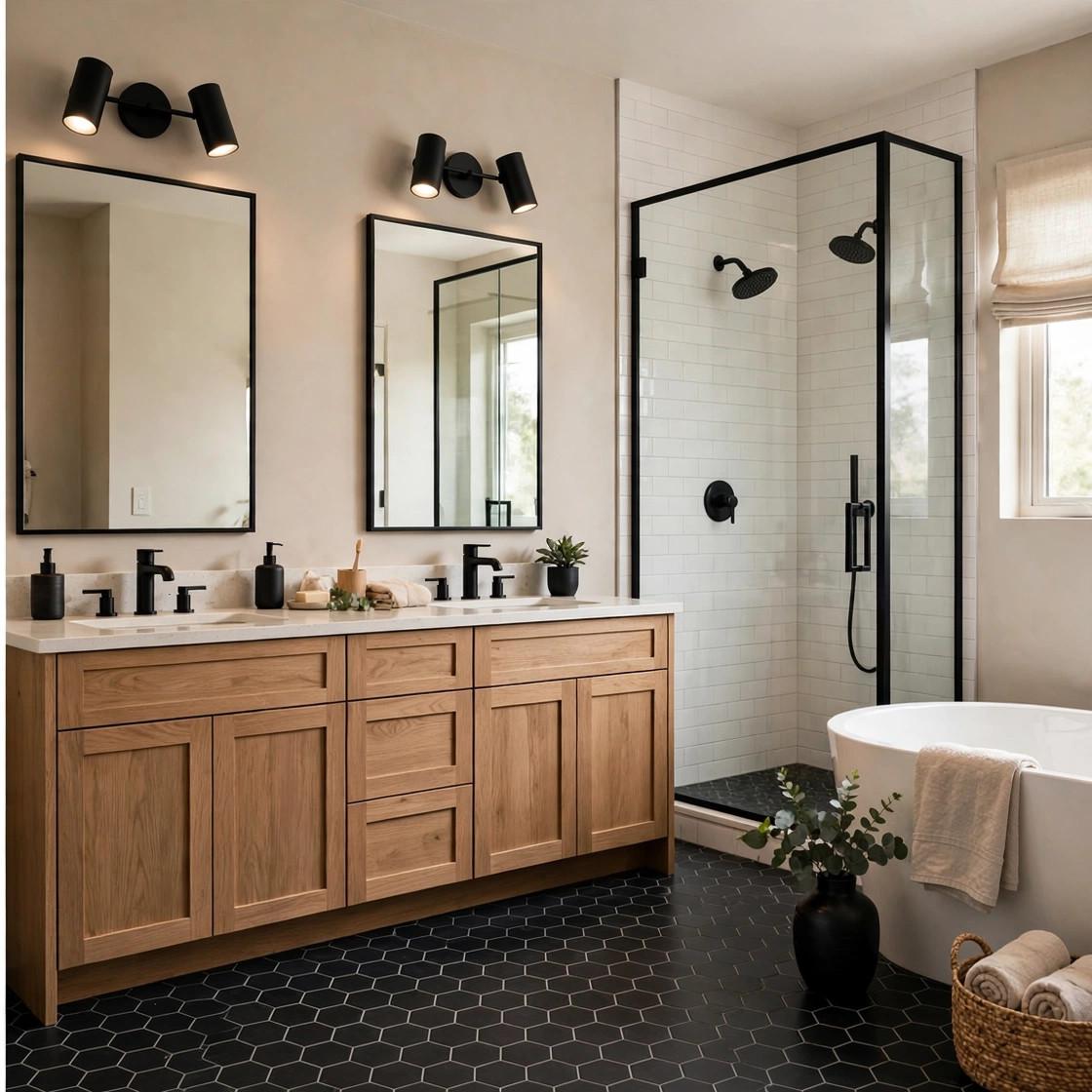
What is usually NOT in a tile quote
- Plumbing — moving or replacing valves, drains, and supply lines is a plumber's scope (in a full remodel, plumbing typically runs $2,000–$5,000 when fixtures stay in place).
- Frameless glass — usually a specialty glass company, typically $1,200–$3,500 installed.
- Fixtures — faucets, shower trim, toilet, and vanity are usually owner-supplied or a separate allowance.
- Electrical and painting — separate trades or separate line items.
None of this is a trick; tile installers price tile. The trick is only in quotes that let you assume these are included. Get exclusions in writing.
How a trustworthy quote is structured
A quote you can compare has line items: demo, prep, waterproofing (system named), tile setting by area, materials and allowances stated, features priced individually, exclusions listed, and a payment schedule tied to milestones rather than a large sum up front. That structure protects both sides — you know what you bought, the installer knows what he sold. Before you compare any two quotes, run your own ballpark through our bathroom remodel calculator so you know which band your project lives in — then compare the quotes' scope, not their totals.
Red flags: reading a too-cheap bid
- Far below every other bid, with no explanation of how. Labor is the product. A price 40% under the market is not efficiency; it is missing scope.
- No waterproofing system named, no flood test. The savings are coming out of the layer that decides whether the shower lasts.
- A price given without seeing the bathroom. Substrate condition is the price. Nobody can quote what they have not looked at.
- "Per square foot" pricing for a whole shower with no detail lines. Showers are priced on details. A single rate hides them.
- Full payment up front, or cash-only with no written scope. Milestone payments and paper are how professionals work.
Tile is one of the few purchases where the cheap version and the right version look identical on delivery day — the difference is scheduled for year three, behind the wall, where it costs the most to fix. Price the scope, verify the system, and the number will take care of itself. When you are ready for a number built on an actual look at your bathroom, request a free estimate or explore what our tile installation service includes — we will break the quote down the same way this post does.
Thinking about this project?
Send us a few details and photos — we'll reply with a free, no-pressure estimate.
Common questions
How much does tile installation labor cost per square foot in the Twin Cities?
For planning in 2026, typical Twin Cities labor ranges run about $8–$15 per square foot for floors and $15–$30+ per square foot for shower walls, depending on prep, format, and pattern. These are market ranges for budgeting, not quotes — a small or complicated shower can price above the range because showers are priced on details and days, not just area.
Why does shower tile cost more per square foot than floor tile?
Because the square footage is small and the work is not. A shower adds waterproofing, a sloped pan, corners, a niche, plumbing penetrations, and vertical setting where every tile is handled against gravity — on a surface a fraction of the size of a floor. The labor is in the details and the days, and the price reflects that.
What is usually not included in a tile installation quote?
Plumbing work, frameless glass, and fixtures are usually separate — and often handled by separate trades or suppliers. Demolition, subfloor repair, and electrical may or may not be in the number. A trustworthy quote lists exclusions in writing; if it is not listed as included or excluded, ask before you sign, not after the work starts.
Is the cheapest tile bid a good deal?
Almost never, and the reason is structural: tile labor is skilled time, and a bid far below the market is usually buying that time back somewhere — skipped waterproofing steps, no flood test, thin mortar coverage, or prep that never happens. Those savings are invisible on day one and expensive in year three. Compare scope line by line, not totals.
How can I estimate my tile project before getting quotes?
Measure the area, note the format and pattern you want, and be honest about prep — old tile to remove, floors to flatten, a shower to waterproof. Our free calculator gives a ballpark for the full bathroom, and a written quote after an in-person look is the only number worth signing on.
